Honda Pilot: Buy Score, Reliability & Ownership Costs
Midsize 3-Row SUV · SUV
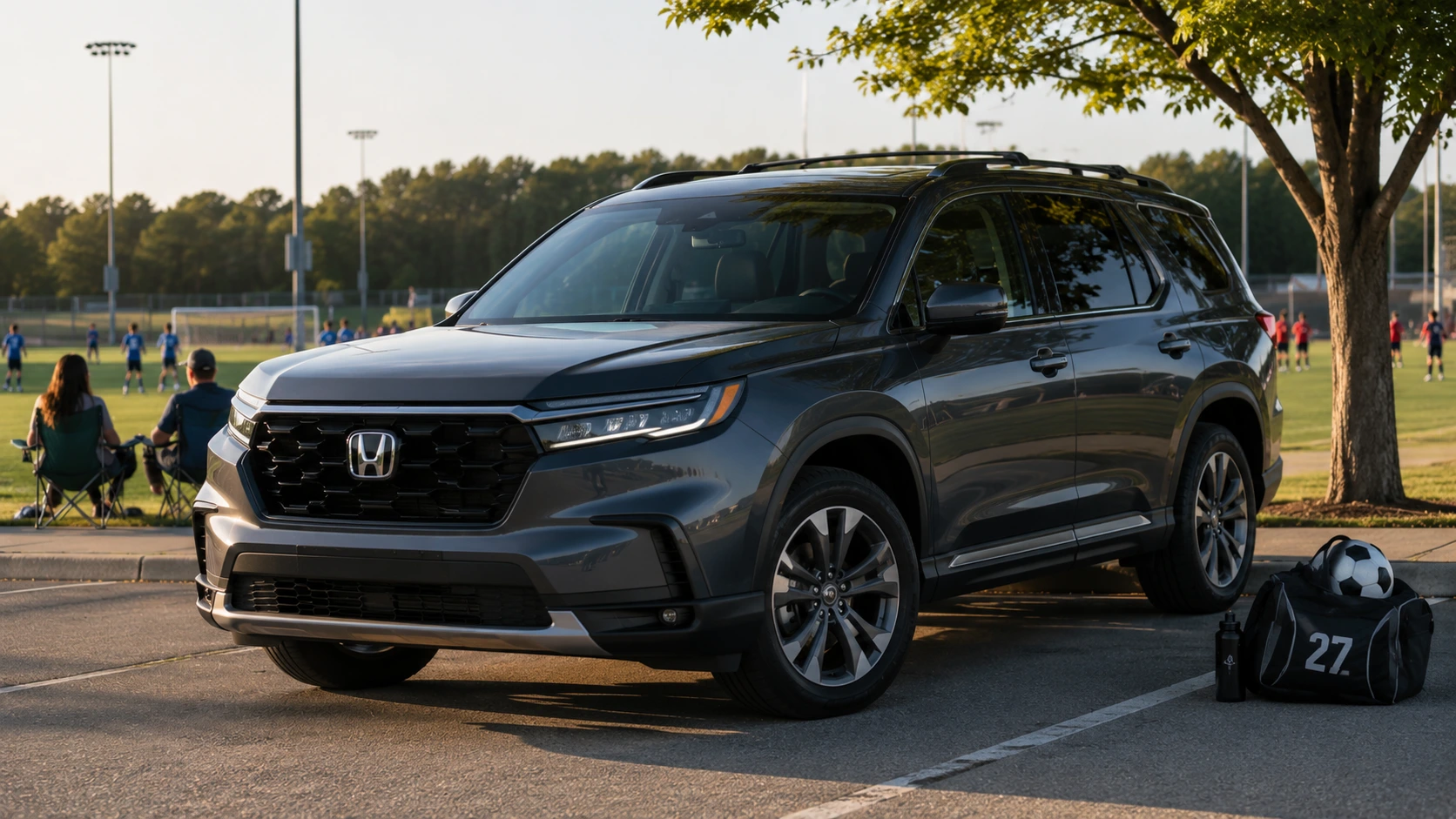

Our Verdict
Based on model-specific reliability data, ownership costs, and longevity signals.
Buy Score™
Pros
- Research doc flags it as one of the cleanest long-term family-SUV bets alongside the Highlander and 4Runner
- Standard 285-hp V6 with a 10-speed automatic — no failure-prone CVT
- Roomy 3-row seating and one of the largest cargo holds in the class
Cons
- 3.5/5.0 RepairPal score trails Honda's own CR-V and Civic
- AWD fuel economy (21 mpg combined) lags hybrid 3-row rivals
- TrailSport's off-road tuning cuts mpg further without much real off-road use case for most buyers
Can this car reach 300,000 miles?
Likely
iSeeCars ranks the Pilot among Honda's strongest utility vehicles for reaching 250,000+ miles, on par with the brand's reputation for long-life SUVs.
First-Time Buyer Friendly
68/100Approachable overall, though a first-time buyer should budget a little extra for insurance or upkeep.
Reliability Timeline
What tends to need attention, and when — based on model-specific reliability data.
30,000 miles
60,000 miles
100,000 miles
150,000 miles
200,000+ miles
What It Actually Costs to Own
RepairPal's 3.5/5.0 model score is below Honda's own brand average, driven mostly by brake-rotor and minor electrical complaints rather than powertrain failures — the V6/10-speed combo in the current generation has no relation to the notorious 2003 5-speed automatic.
Full Specifications
Check for open recalls before you buy
We don't yet have a live recall feed wired up for the Honda Pilot, so we won't guess at a number here. Before you buy any specific Pilot, run its VIN throughNHTSA's free recall lookup tool— it takes about 30 seconds and confirms whether that exact vehicle has any open, unrepaired safety recalls.
Similar Vehicles
Sources: RepairPal model score (3.5) and annual repair cost ($542), plus the family-SUV “buy” recommendation: deep-research-report-car-buying-guide.md, best-bets-by-segment section. iSeeCars longevity context for Honda utility vehicles: deep-research-report-car-buying-guide.md, reliability-and-recall-patterns section. 2026 MSRP by trim ($42,395-$55,195), 285-hp 3.5L V6/10-speed powertrain, and EPA fuel economy (22 mpg FWD / 21 mpg AWD combined): supplemental web research, verified July 2026 (automobiles.honda.com, fueleconomy.gov). Common-problem history (warped front rotors, headlight harness fault, historic 2003 5-speed transmission issue): supplemental web research, verified July 2026 (RepairPal Honda Pilot problems page).